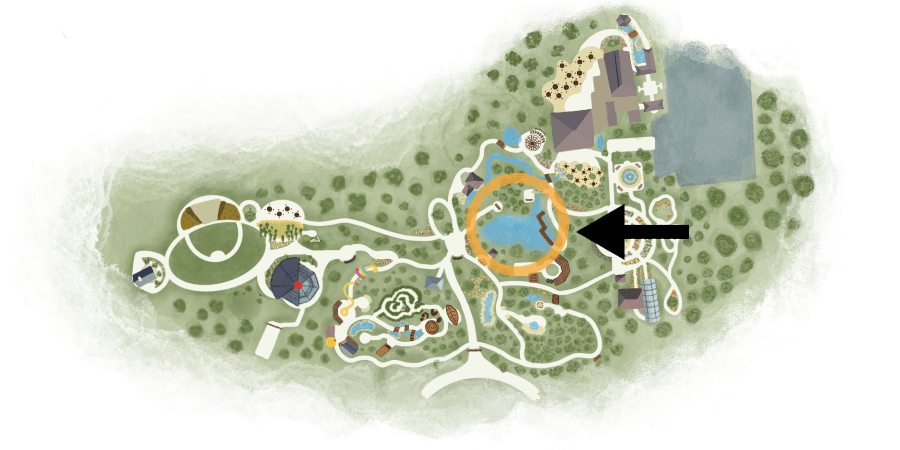
Jayne Milburn Aquatic Collection

In landlocked Kansas, Botanica maintains a magnificent range of plants in the Jayne Milburn Aquatic Collection. The redwood boardwalk over Boeing Pond feels like you are walking through a wetland in spring and summer. The diverse selection of plants on display include Water Lilies, Lotuses, Water Irises, Water Hyacinths, Water Lettuce, Cattails and many others.
Nearly 50 varieties of aquatic perennials, in more than 100 containers, fill this habitat. Surrounding Boeing Pond, the American Elm on the north bank and the Weeping Willow on the south bank make impactful reflections on the water. Numerous varieties of ornamental grasses create a natural screen and provide beautiful plumes during the fall and winter months.
Dedicated: 1989
Great Blue Heron, by Dennis P. Anderson, is a tall bluish-gray bird wading with spindly legs and a curved, graceful neck.
- The Victoria Amazonica Water Lily or Water Platter originated in the Amazon. The leaf grows up to 9’ across and can support a person up to 200 pounds. It only blooms 2 to 3 nights through mid-morning. The bloom is white the first night, turns pink the second night and a deeper pink the third night.
- The pond features a Hardy Purple Fantasy Water Lily, the first successful cross between a hardy and a tropical lily. The beautiful, round waxy pad of the Water Lily is only the leaf of the plant. It is beautiful but its function is even more interesting. The pad you see claims up to two liters of oxygen a day. It sends the oxygen to the roots of the plant several feet below and then shares it within the water. Lily pads also benefit their habitats by providing shade for fish and natural oxygen that helps beneficial bacteria and other species thrive. Lilies are placed in the pond during mid-summer when the water is warm.
- Botanica’s largest pond is 2’ to 3’ deep around the edges and 6’ to 8’ deep in the center. There are several varieties of fish in the pond. Bluegill, Bass, Carp and Catfish are plentiful. A single Koi also made its way down from the Pavilion Pond. Frogs also love lily pads as a safe place to perch from predators below the surface of the water.
- In the summer, you will frequently see gardeners cleaning Duckweed from the surface of the pond. Considered a nuisance by most pond owners, Duckweed is one of the smallest plants that floats on water. It looks and feels like green sand and reproduces every 3 hours.
- The purple or white, tall, speared flowers you may see are Pickerelweed or Pickerel Rush. Its name comes from the Pickerel Fish or Northern Pike with which this plant often coexists. Green Pickerelweed leaves are edible and the seeds can be roasted and eaten as nuts. Pickerelweed is a food source for a variety of aquatic and terrestrial animals. Ducks and muskrats eat the fruits. Many animals also eat the leaves, roots and stems such as deer, geese, snails and carp. Northern Sea Oats around the boardwalk are notable for large, graceful seed heads.


Jayne Milburn Aquatic Collection Location